Johnson v. Fleming
Case Snapshot
For over 250 years, since before our nation even became a nation, military chaplains have helped American servicemembers access their faith wherever duty takes them. Indeed, the constitution requires federal and state governments to provide and support military chaplains to protect servicemembers’ free exercise of religion. This is no less true for the Virginia National Guard, whose origins include George Washington’s insistence on a professional chaplaincy that could meet the diverse religious needs of Virginia’s servicemembers. Despite maintaining the chaplaincy, paying chaplains, requiring chaplains to receive theological education, and providing tuition assistance to other religious college coursework, Virginia discriminatorily excludes chaplaincy-related degrees—the very education it requires of chaplains—from its tuition assistance program.
Status
Share this Case
Case Summary
Supporting religion on the front lines
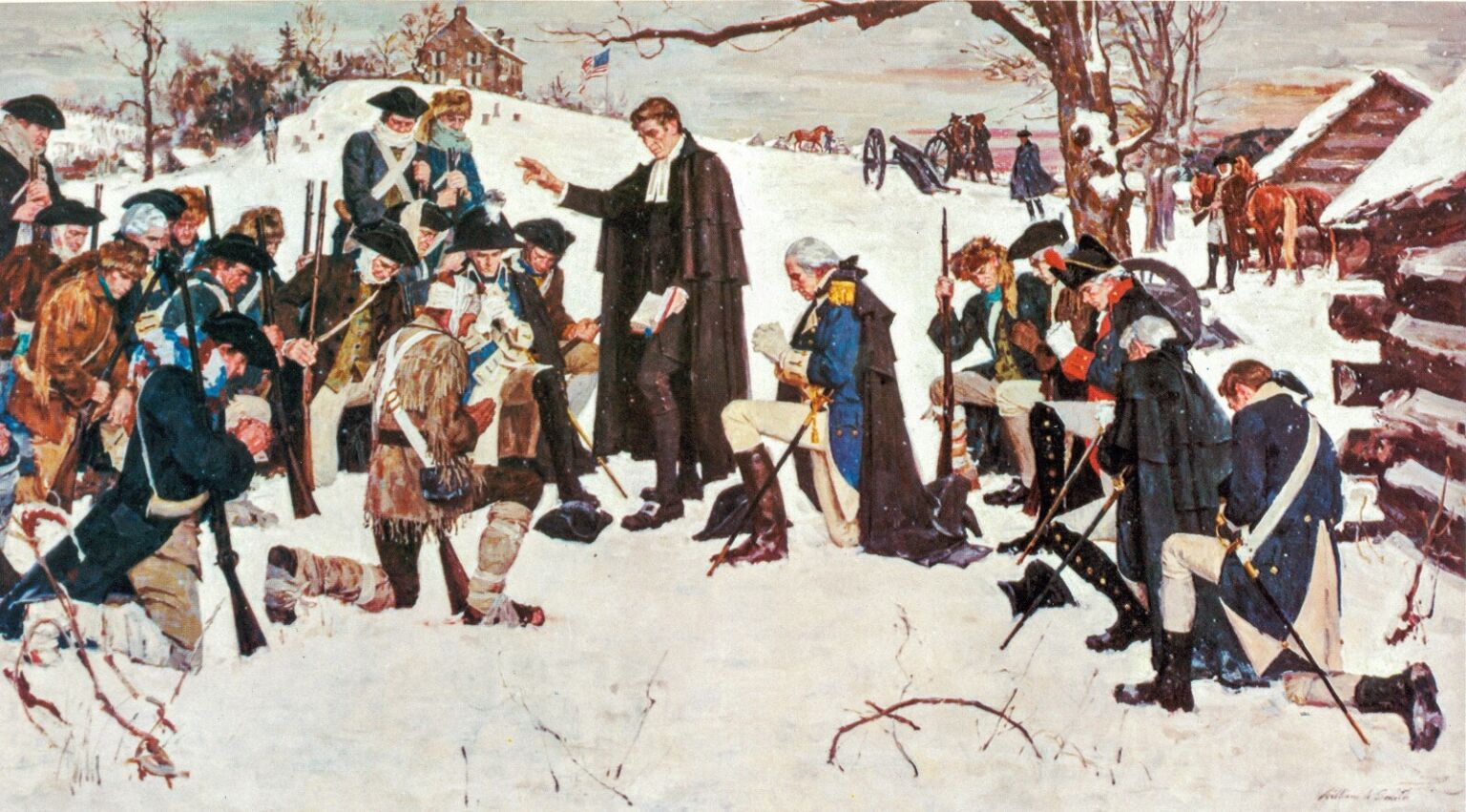
America’s military chaplaincy has religious roots and predates the birth of our nation. During the French and Indian War, then-Colonel George Washington—believing in religion’s importance and beneficial influence on soldiers—urged the Governor of Virginia and Virginia legislative leaders to finance a chaplain for the Virginia regiment. Later, as General of the Continental Army, Washington worked to expand and professionalize the chaplaincy to meet the religious needs of his religiously diverse troops. He also was instrumental in persuading the Continental Congress to preserve and fund the chaplaincy for future generations.
That historical tradition is also a constitutional duty: under the First Amendment’s Religion Clauses, because the government removes service members from their faith communities as part of military service, it must also furnish the means for religiously diverse servicemembers to access worship and spiritual care while serving. Today, military chaplains carry out that duty by leading religious services, officiating burials, and guiding servicemembers through long separations, high stress, dangerous assignments, trauma, and loss. Chaplains are not generic counselors. They are representatives of religious traditions endorsed by their respective church, synagogue, mosque, or religious community to provide pastoral care to the brave men and women who serve our country.
Virginia backs the chaplaincy—but only to a degree
The Virginia National Guard is a dual-status military force that serves as a combat reserve for the U.S. Army and Air Force while also answering the call of the Virginia Governor to defend the Commonwealth. Crucial to the Virginia National Guard’s mission is the chaplaincy, which is tasked with providing “the highest levels of religious support” across military operations. Virginia supports that mission by maintaining a formal chaplaincy structure, paying chaplains when they are called into state active duty, and requiring chaplains to complete advanced religious training, including theology coursework.
Yet Virginia excludes Guard members who want to become chaplains from its tuition-assistance program. Any Guard member committed to two years of service can get tuition assistance toward a college degree. But if a Guard member studies to become a chaplain, Virginia denies aid. This is as unconstitutional as it is illogical: the Guard requires its chaplains to have a master’s degree with at least 36 credits in theology, but signing up for a theology degree gets them cut from the tuition assistance program.
Becket urges Fourth Circuit to protect the military chaplaincy
A student in the Virginia National Guard is seeking a Master of Divinity to become a chaplain, but the Commonwealth denied him tuition assistance because it said his degree was too religious. He then filed a lawsuit against Virginia in federal court. After the district court allowed Virginia’s policy to stand under a Supreme Court decision known as Locke v. Davey, the students appealed to the Fourth Circuit. On June 2, 2026, Becket filed a friend-of-the-court brief on behalf of retired Chaplains Douglas L. Carver and Thomas J. Solhjem, who both retired at the rank of Major General and served as the Army’s 22nd and 25th Chief of Chaplains, respectively.
Becket argues that Locke—a narrow decision about state funding for devotional theology degrees for anyone—does not apply to chaplain candidates seeking to serve in the military chaplaincy. The government has a constitutional duty to support and provide the military chaplaincy. While states need not provide tuition-assistance to all postsecondary education, they certainly cannot target chaplain candidates for disfavor among a generally available tuition-assistance program. Here, Virginia already funds and relies on chaplains, requires theological training, and subsidizes some religious coursework. Virginia is not required to provide tuition assistance for postsecondary education. But having chosen to offer such assistance, Virginia cannot exclude Guard members pursuing chaplaincy-related degrees simply because their degrees are religious. Allowing Virginia to decide which religious training is too “religious” for funding would let the government discriminate among the religious needs of servicemembers themselves. These are threats to baseline First Amendment protections and the very logic of a government-supported military chaplaincy.
Importance to Religious Liberty:
- Individual Freedom: Religious exercise encompasses more than just thought or worship. Religious individuals must be free to follow their faith in all aspects of life, especially those who serve in our military to defend the freedom of all Americans.
- Public square: Because religion is natural to human beings, it is natural to human culture. Consistent with our constitutional history and tradition, religious exercise can, and should, have a special place in the public square.