St. Mary Catholic Parish v. Roy
Case Snapshot
Colorado parents Dan and Lisa Sheley are raising their seven children in the Catholic faith. In 2022, Colorado promised families “universal” preschool funding—worth more than $6,000 per eligible child—to use at the public, private, or faith-based preschool of their choice. The Sheleys chose the Catholic school their older children already attend. But once the program launched, Colorado denied them the benefit for one reason only: their preschooler would attend a Catholic school. Colorado’s actions have left over 1,500 families like the Sheleys out in the cold simply because they want a Catholic education for their children. Becket has filed a lawsuit against Colorado to protect the right of all families to have equal access to Colorado’s “universal” preschool funding regardless of the preschool they choose.
Status
On April 20, 2026, the Supreme Court agreed to hear this case. Oral argument is expected in the fall of 2026.
Share this Case
Case Summary
A commitment to Catholic education
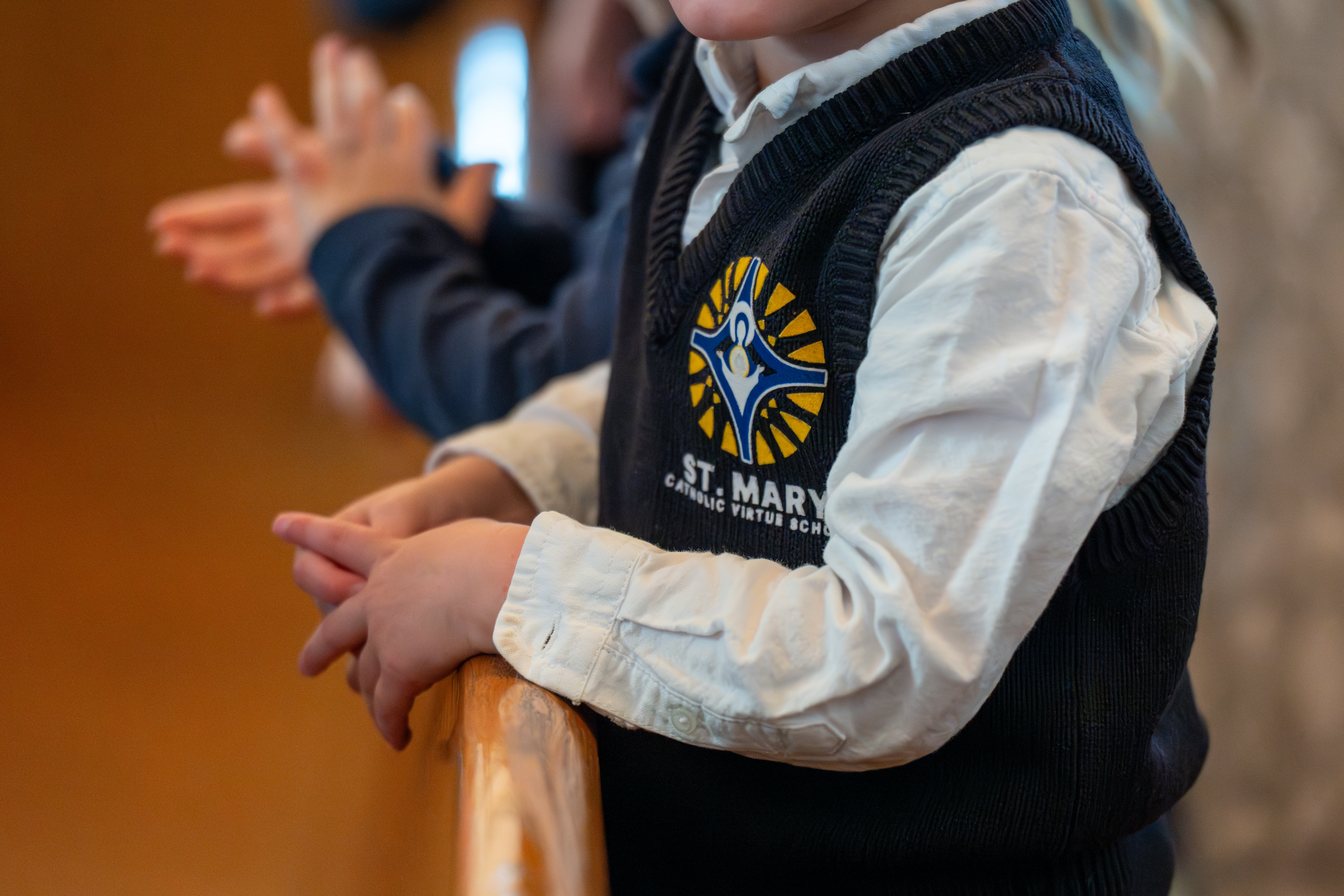
Dan and Lisa Sheley are Colorado parents raising seven children in the Catholic faith. As parishioners of St. Mary Catholic Parish, they have built their family’s life around the parish and school—the place where their children learn, pray, and grow with peers who share and support the Catholic teachings the Sheleys are passing on at home. Five of their children attend St. Mary’s school today, and their youngest is expected to begin preschool there in 2028.
For families like the Sheleys, a Catholic preschool doesn’t just provide a quality academic education. It provides their family with a community formed by faith—where religious instruction, prayer, and formation are integrated into the curriculum, and where parents can entrust their children to educators who reinforce, rather than undermine, their religious beliefs. This is precisely what the Archdiocese of Denver’s schools have provided for decades: academic rigor coupled with moral and spiritual formation, in close partnership with parents. To maintain this faith-filled community, the Archdiocese’s schools ask that all families who attend display a positive and supportive attitude toward the Catholic Church, its teachings, and the religious mission of Catholic schools. Any family willing to do this is welcome.
“Universal” preschool, unless you are Catholic
In 2023, Colorado’s Department of Early Childhood launched a preschool funding program to provide eligible families with approximately $6,300 to cover the cost of 15 hours per week of preschool. Marketed as “universal,” the program was designed to give families the flexibility to enroll their children at public, private, or faith-based preschools. Like other young families in Colorado, Catholic families were eager to participate.
However, when the program was implemented, families seeking to use this benefit at the Archdiocese of Denver’s Catholic preschools found themselves excluded. More than 1,500 children across over 30 Catholic preschools were deemed ineligible for the funding, solely because of their preschool’s religious affiliation.
The Department justified this by claiming the Archdiocese’s religious exercise—specifically, its inability to use opposite-sex pronouns or offer dress code and bathroom accommodations for a hypothetical transgender preschooler—were inconsistent with the funding program’s requirements. Yet the Department readily acknowledged there was no evidence even a single transgender preschooler had sought to attend Catholic preschool in Denver. And, worse, Colorado’s universal preschool program director admitted to applying a double standard—testifying that families could use state funding to send their children to preschools that served only LGBTQ families, transgender children, or even children of a specific race.
The Constitution forbids religious discrimination
Colorado is punishing families who choose to send their kids to Catholic preschools. The State didn’t have to offer families this government benefit at all. But having decided to make this funding available “universally,” what Colorado bureaucrats can’t do is use this program to discriminate against families who want to send their children to Catholic preschools.
The Supreme Court has three times in the past ten years affirmed that governments cannot exclude people from public benefits because of their religious beliefs or religious exercise. Colorado families should be free to send their kids to a Catholic preschool without forfeiting an important public benefit—especially one Colorado has described as “universal.”
Colorado’s actions have already had devastating effects. Families like the Sheleys who send their children to Catholic schools are put to a difficult choice: pay thousands of dollars out of pocket for Catholic preschool or pull their children from the school and out of their Catholic community. This choice—like putting a tax on Catholic education—weighs heaviest on middle- and low-income Colorado families. What is more, preschool enrollment across the Archdiocese has declined by roughly 20% while two Catholic schools—Wellspring Catholic Academy and Guardian Angels Catholic School—were forced to close due to shortfalls in funding and decreased enrollment. Colorado’s actions have made it harder for all families to access quality preschools.
Colorado is at it again
In November 2025, Becket asked the Supreme Court to stop Colorado from excluding Catholic families from the state’s “universal” preschool program. In April 2026, the Court agreed to hear the case. The case will be argued in fall 2026.
The Supreme Court’s decision to hear this case draws further attention to Colorado’s record on religious freedom issues. Since 2018, Colorado has been on the losing side of three freedom-of-religion cases at the Supreme Court: Masterpiece Cakeshop, 303 Creative, and Chiles v. Salazar. Catholic families across Colorado are asking the Supreme Court to step in once more and stop Colorado from denying them equal access to a “universal” government benefit.
Importance to Religious Liberty:
Education: Religious families and schools should be given equal access to tuition funding and not excluded because of their faith.
Religious Organizations: Religious organizations must be free to act according to their faith. The government should not discriminate against religious groups by demanding they give up their religious beliefs in order to have equal access to a generally available government benefit.