Federal appeals court bars government overreach into Lutheran church Fifth Circuit says courts can’t force religious groups into a governmental mold
Media Contact
Ryan Colby 202-349-7219 [email protected]
Additional Information
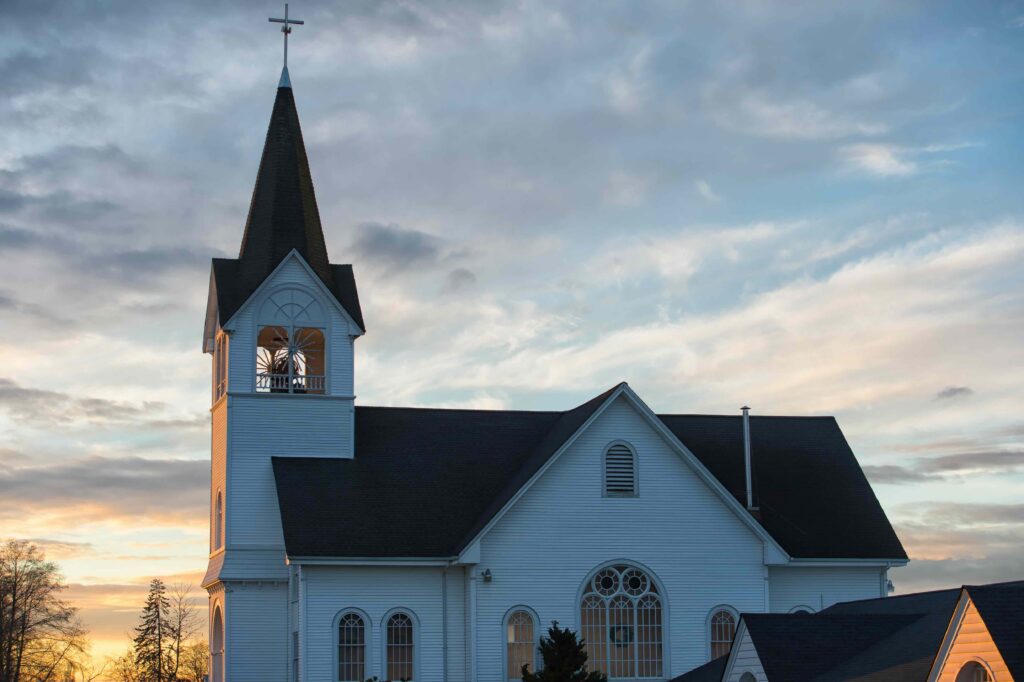
WASHINGTON – A federal appeals court yesterday protected The Lutheran Church—Missouri Synod’s right to organize itself according to its religious beliefs, free from government interference. In The Lutheran Church—Missouri Synod v. Concordia University Texas, a lower federal court blocked the Church from challenging efforts by one of its own universities to cut ties with the Church. The lower court ruled that only the Synod—the Church’s spiritual body which does not handle legal matters—could bring the case, even though the Church’s structure forbids that. Becket’s victory makes clear that the government cannot interfere with the Church’s internal structure or force it to compromise its beliefs about the roles of spiritual and legal authority.
In the early 1800s, the founders of The Lutheran Church—Missouri Synod came to the United States after Lutherans had through generations and in various ways endured religious persecution and state coercion in Europe. That difficult experience reinforced the Church’s belief that sacred and secular affairs must remain distinct. For over 130 years, the Church has followed a structure that reflects that conviction: the Synod, a purely spiritual body, leads on religious matters free of state interference, while its Missouri legal entity—the LCMS—represents the Church in matters with secular connections, including property, business, and legal affairs.
“For over a century, the Church has recognized a clear line between the things of God and the things of Caesar,” said Daniel Blomberg, vice president and senior counsel at Becket. “That conviction is rooted in the Church’s core beliefs and its experience suffering religious persecution in Europe. We’re glad the court respected that religious decision and kept the government in its lane.”
In 2022, Concordia University Texas—a school founded by the Church to assist its religious mission—attempted to unilaterally cut ties with the Church. Without Church approval, Concordia’s board rewrote the school’s charter and bylaws to eliminate the Church’s oversight and claimed the school was no longer bound by Church authority. When LCMS challenged the move in federal court, the lower court rejected the case, ruling that the lawsuit should have been brought by the Synod (the Church’s spiritual body) instead of the LCMS (the Church’s legal corporation formed to handle legal affairs of the Synod). Becket helped the Church appeal, arguing that judicially forcing the Synod to take over LCMS’s legal role would violate the Church’s core beliefs. It would also create confusion for other churches about whether they can choose their own governance structures to support their spiritual mission.
In its decision , the Fifth Circuit ruled for the Church, with Judge Edith Jones writing that “[t]he district court’s ruling quintessentially violated the church autonomy doctrine” by engaging in an “invasive inquiry” that “replaced the Church’s descriptions of its polity, rooted in doctrine, with the court’s secular reading of the Church’s constitution, bylaws, and policies.” This second-guessing “essentially denied the Church’s self-identity” and was “precisely the type of review the [church autonomy] doctrine seeks to prevent.”
“In America, churches—not courts—get the final say in how they are structured and governed,” said Blomberg. “Uncle Sam can’t remake houses of worship into his own image. The Fifth Circuit reinforced that common-sense rule, which is a win for every faith community in the country.”
LCMS is also represented by Wallace Jefferson and Kevin Dubose of Alexander Dubose & Jefferson, Steven Levatino of Levatino|Pace, and Andrew MacRae of MacRae Law Firm.
For more information or to arrange an interview with a Becket attorney, contact Ryan Colby at [email protected] or 202-349-7219.