Supreme Court weighs push to redefine sex under federal law Becket argues ruling against West Virginia law would unleash legal attacks against religious groups
Media Contact
Ryan Colby 202-349-7219 [email protected]
Additional Information
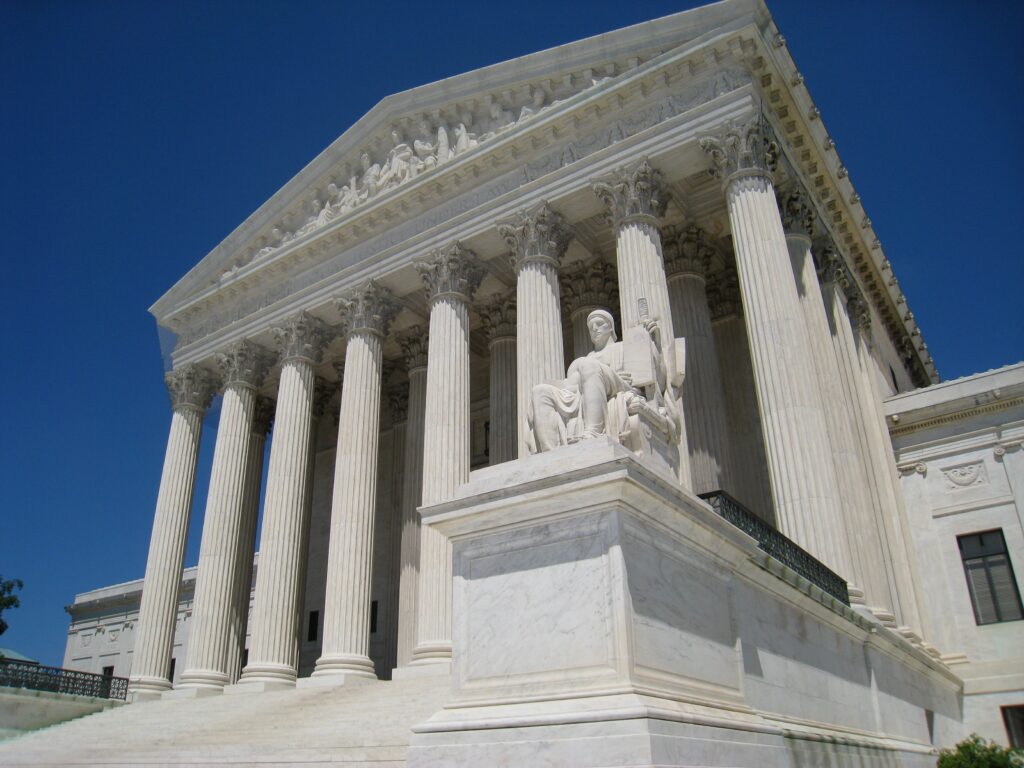
WASHINGTON – The Supreme Court heard a case today involving a West Virginia law that requires public schools to separate sports teams by biological sex. In West Virginia v. B.P.J., the ACLU and Lambda Legal argue that Title IX—the federal law ensuring equal opportunity for women in education—requires schools to allow male athletes who identify as transgender to participate on girls’ teams, even though Title IX says nothing about gender identity. Becket filed a friend-of-the-court brief in support of West Virginia, warning that redefining sex in federal law would threaten the freedom of religious schools, healthcare providers, and other religious institutions to operate according to their beliefs about sexuality. Read more about the cases Becket is watching at the Court this term here.
West Virginia’s Save Women’s Sports Act requires public schools in West Virginia to separate sports teams by biological sex, preserving equal athletic opportunities for female athletes. Before the law took effect, the ACLU and Lambda Legal sued on behalf of a male student who identifies as transgender and sought to compete on a girls’ team, arguing the state law violates Title IX by targeting the student’s transgender status. A lower court upheld West Virginia’s law, but the Fourth Circuit reversed. West Virginia is now defending the Save Women’s Sports Act at the Supreme Court as being fully consistent with Title IX.
“Shoehorning gender identity and sexual orientation into Title IX would wreak havoc on religious educational institutions and healthcare providers that hold traditional beliefs about human sexuality,” said Laura Wolk Slavis, counsel at Becket. “That’sexactly what happened after Bostock, where religious employers have been continually dragged into court and investigated by the government simply for living out their faith. The Justices should ensure that cycle doesn’t repeat.”
Becket’s brief warns that ruling against West Virginia would open the floodgates to aggressive federal enforcement and lawsuits against not only religious educational institutions, but also religious healthcare providers, since the Affordable Care Act makes Title IX apply in the healthcare context. The same pattern followed Bostock v. Clayton County, where the Supreme Court expanded the meaning of “sex” under Title VII—a law prohibiting discrimination in the employment context—to include sexual orientation and gender identity, but did not provide robust protections for religious liberty. In the wake of that ruling, religious employers were sued for following their beliefs, and federal agencies continued efforts to force religious healthcare providers to perform gender-transition procedures in violation of their faith and best medical judgment. Most Americans are opposed to such efforts. Recent polling from Becket’s 2024 Religious Freedom Index shows 80% of Americans support faith-based organizations’ freedom to operate in accordance with their religious beliefs. Becket’s brief urges the Court not to repeat what happened with Bostock in this case by interpreting Title IX as written.
“Faith-based organizations shouldn’t be bullied into years of needless litigation simply for staying true to their beliefs,” said Wolk Slavis. “The Court should reject the ACLU and Lambda Legal’s aggressive effort to rewrite Title IX and ensure that religious groups can live out their faith without fear of punishment.”
A ruling is expected by the end of the Court’s term in June 2026.
For more information or to arrange an interview, contact Ryan Colby at [email protected] or 202-349-7219.