Retired Army Chiefs of Chaplains urge appeals court to defend military chaplains and religious support for servicemembers Virginia denies aid to National Guard members seeking chaplaincy-related degrees
Media Contact
Ryan Colby 202-349-7219 [email protected]
Additional Information
WASHINGTON – Becket filed a friend-of-the-court brief yesterday on behalf of two retired Army Chiefs of Chaplains. The brief urges the U.S. Court of Appeals for the Fourth Circuit to stop Virginia from denying tuition assistance to National Guard members pursuing the religious education needed to become military chaplains—a policy that could leave troops without the spiritual care they need.
In Johnson v. Fleming, a student in the Virginia National Guard is seeking a Master of Divinity to become a chaplain, but the Commonwealth denied him tuition assistance because it said his degree was too religious. He’s now challenging Virginia’s policy in federal appeals court.
Following the Constitution’s mandate to furnish our servicemembers’ religious needs, Virginia maintains a formal chaplaincy structure, pays chaplains when they are called into state active duty, requires chaplains to complete advanced religious training, and provides tuition assistance for other religious college coursework. Yet Virginia denies aid to Guard members pursuing the very education needed to serve as chaplains, putting the spiritual well-being of servicemembers at risk.
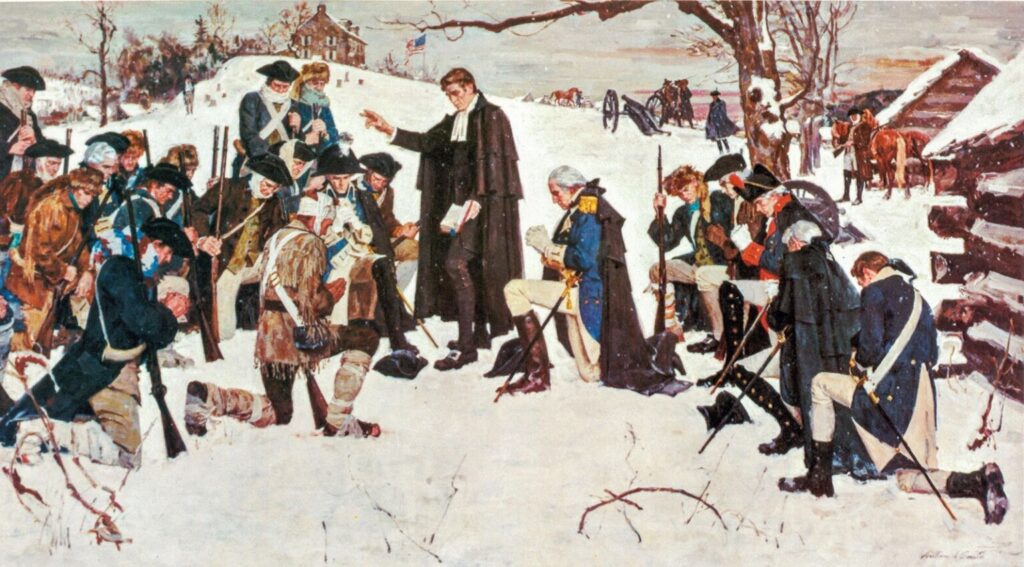
“There is a constitutional duty to satisfy our soldiers’ free exercise of religion, one that every American generation has faithfully met by providing chaplains to meet the religious needs of our brave servicemembers,” said William Haun, senior counsel at Becket. “This tradition is marked by religious roots, George Washington’s example, and our nation’s enduring gratitude. Virginia should remember it, not block the next generation of chaplains from answering their sacred call.”
America’s military chaplaincy has religious roots and predates the birth of our nation. George Washington helped establish and sustain chaplaincy because he believed that religious exercise is a good that no soldier should be forced to sacrifice to serve his country. That historical tradition became a constitutional duty: the government must ensure that religiously diverse servicemembers can freely access worship and spiritual care while serving. Today, chaplains carry out that duty by leading religious services, offering spiritual guidance, and helping troops through long separations, high stress, dangerous assignments, trauma, and loss.
“Virginia’s discriminatory policy is constitutionally indefensible, historically illiterate, and breaks one of our best national traditions,” said Haun. “We’re asking the Fourth Circuit to end Virginia’s religious exclusion and protect the chaplaincy our military needs.”
After a lower court allowed Virginia’s policy to stand under a Supreme Court decision known as Locke v. Davey, the student appealed to the Fourth Circuit. Becket’s brief was filed on behalf of retired Army Chiefs of Chaplains. The brief explains that Locke—a narrow decision about state funding for devotional theology degrees—does not apply to military chaplaincy. The government has a constitutional duty to provide chaplains because servicemembers often cannot freely access worship or religious needs while serving. While Virginia is not required to provide tuition assistance to postsecondary education, it has chosen to do so. With that choice, Virginia cannot exclude the religious education required for military chaplains simply because that education is religious.
A hearing in the case is expected later this year.
For more information or to arrange an interview, contact Ryan Colby at [email protected] or 202-349-7219.